Is There a Tool Chest That Is 19 Inches Deep?
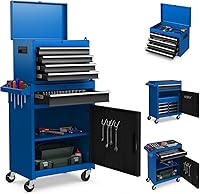
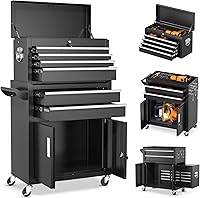
Yes, a 19-inch-deep tool chest exists, though most full-size chests run a little deeper. The closest matches in rolling chests are the WORKPRO 52 in and 62 in models at about 20 to 21.6 in deep, which fit many shallow garage bays.
On this page (10 sections)
- Is there a tool chest that is 19 inches deep?
- What does "19 deep" actually mean on a tool chest?
- What depth do standard rolling tool chests come in?
- Will a 20-inch-deep chest fit where you measured 19?
- Which rolling chests come closest to 19 inches deep?
- Should you choose a pegboard model or a plain bench?
- How should you measure a tight garage bay for a chest?
- Tool chest or cart: which fits a shallow space better?
- Can you put a cabinet under a workbench instead?
- What should you do next if 20 inches is still too deep?
Yes, a tool chest that is 19 inches deep exists, though most full-size rolling chests come a little deeper. The closest fits in rolling chests are about 20 to 21.6 in deep, which work for many shallow garage bays once you measure the space.
The real question is what "19 deep" means for your particular wall, aisle or alcove. Depth is front to back, and a few inches of clearance decide whether a chest slides in or not.
Is there a tool chest that is 19 inches deep?
Yes, but it's at the shallow end of what rolling chests offer. Most full-size chests run about 20 to 24 in deep, so a true 19 in model is a specialty or a compact unit rather than the standard.
The practical answer for most readers is a chest around 20 in deep. That's close enough to fit a bay sized for 19, and it buys you more drawer room at the back than a 19 in body.
Depth also affects how much you can store. A deeper drawer holds longer tools like levels, breaker bars and long wrenches, so buying the shallowest chest that fits can cost you usable storage.
Measure your space before you compare models. A chest that's 2 in too deep for a wall bump-out won't work, no matter how well it's built.
What does "19 deep" actually mean on a tool chest?
Depth is the front-to-back measurement of the cabinet, not the space it takes up. The handles, door swing and open drawers all add to that footprint, so the real clearance is bigger than the listed depth.
A chest listed at 20 in deep with side handles can occupy more than 24 in of floor once you account for the handles and a working aisle in front. That matters in a narrow bay or beside a car.
Depth is often confused with width, which runs left to right along the front. A 52 in wide chest sits against a long wall, while a 20 in deep one controls how far it juts into the room.
If you're new to the parts and sizing terms, our guide to what a tool chest is breaks down depth, width, drawers and cabinet doors.
What depth do standard rolling tool chests come in?
Most full-size rolling chests fall between about 18 and 24 inches deep. Compact chests sit at the shallow end, while workbench-style cabinets with a solid top often run deeper.
The three WORKPRO rolling chests here sit near 20 in. Their depths are written as 21.6 in and 21.57 in, so plan for a little over 20 in of body plus handle clearance.
That makes them a good match for a garage bay measured at 19 to 20 in deep, once you've allowed a few inches behind the unit for the wall and cord.
A shallower chest isn't automatically better. If you have the room, a 22 to 24 in deep cabinet holds more and gives you a more stable base for a heavy load.
Will a 20-inch-deep chest fit where you measured 19?
Sometimes, but don't assume it will. A chest listed at 20 in deep can be 21.6 in at the body, and handles and casters bring the real footprint out further.
Measure the narrowest point of the space, front to back. Then add the handle depth, a couple of inches behind the chest for a wall, and clear floor in front for opening drawers.
Test the path you'll roll it through. A doorway, a step or a parked car can block a chest that fits the final spot perfectly.
If the space is tighter than 21 in, look at compact chests or a stackable system instead. Our roundup of the best tool chests covers sizes across the range.
Which rolling chests come closest to 19 inches deep?
The closest full-size matches are the WORKPRO 52 in and 62 in rolling chests at about 20 to 21.6 in deep. Each holds 1000 lb and rolls on four swivel casters with brakes.
The 52 in 5-drawer model pairs a solid 1-3/8 in wood top with a locking system and a full cabinet door on an adjustable shelf. It's the simple pick if you want a single wide bench and a shallow footprint.
The 62 in 7-drawer version trades a little extra length for two doors and more drawers, still at 21.6 in deep. It suits a long wall where depth is the limit but width isn't.
Which one should you pick?
Pick the 52 in 5-drawer if you want the widest bench at the shallowest build. Pick the 62 in 7-drawer if you need more drawers and can spare the extra 10 in of length along the wall.
Should you choose a pegboard model or a plain bench?
Choose the pegboard model if you want tools off the top and on the wall, and the plain bench if you want a clear work surface. Both fit the same depth budget.
The pegboard version keeps frequently used hand tools in reach without stacking them on the bench. It's a fair fit for a shallow bay where you can't add a separate wall rack.
The plain 52 in model gives you a full wood top for cutting and assembly work. Choose it when your small tools already live in drawers and you'd rather have open bench space.
How should you measure a tight garage bay for a chest?
Measure the floor footprint, not the wall. Use a tape from the back wall to the front edge of where the chest will sit, then add the handle depth and a work aisle.
Write down three numbers: the depth, the width and the height you can clear under any shelf or window. Casters add height, and the wood top adds more.
Check the swing of doors and drawers. Drawers pull out toward you, so leave a clear strip in front or you'll be shuffling the chest every time you reach in.
Leave a little room behind the chest for cords. The WORKPRO chests have a 1.5-meter power cord with 6 outlets and 2 USB ports, so a nearby outlet matters.
Tool chest or cart: which fits a shallow space better?
A cart usually fits a shallow space better, while a chest gives you a locked, level work surface. A cart is often narrower front to back and easier to tuck against a wall.
The trade-off is storage and security. A chest holds more in drawers and a cabinet, locks shut with keys, and gives you a stable wood top to work on.
If your back wall is the tightest dimension, compare the two in our guide to tool chest vs tool cart. It walks through when each one earns its floor space.
For most buyers with a 20 in bay, the chest still wins if you need locked storage and a bench. The cart wins when you need to move tools around a big shop.
Can you put a cabinet under a workbench instead?
Yes, and a cabinet is often the smarter pick for a shallow space. A chest-height cabinet slides under a bench, so the top stays clear and the depth is easier to manage.
A cabinet also keeps the tools out of the way, which matters in a single-car garage where every inch counts. The trade-off is that you lose the rolling work surface.
Compare the two in our guide to tool chest vs tool cabinet before you commit. It covers height, mobility and how each one works under a bench.
What should you do next if 20 inches is still too deep?
If 20 in is still too deep, step down to a compact chest or a stackable system. Look for a shallower body and skip the side handles if the bay is truly tight.
Stackable systems let you build up rather than out, which helps when depth is the constraint. Compact chests trade capacity for a smaller footprint.
Set a firm rule: if the measured depth minus handles is under the chest's body depth, don't buy it. A chest that doesn't fit becomes a problem, not a workbench.
So, is there a tool chest that is 19 deep? Yes, at the shallow end, and a 20 in WORKPRO rolling chest is the closest practical fit for most bays.
Measure front to back, allow for handles, and pick the width you can spare along the wall.
Frequently asked questions
Is a 19-inch-deep tool chest the same as 19 inches wide?
No. Depth is the front-to-back measurement, while width runs left to right along the front.
A chest that is 19 in deep can still be 52 in wide, so check both numbers against your wall and aisle space.
Can a 20-inch-deep tool chest squeeze into a 19-inch alcove?
Usually not without work. The body needs clearance for the door swing, handles and casters, so a 19 in alcove leaves no room.
A chest built for a tight bay is a better fit than forcing one into a space it wasn't measured for.
Does a deeper tool chest hold more than a shallow one?
Depth adds room at the back of every drawer, so a deeper chest can hold longer tools like levels and wrenches. Width and drawer count matter more for total capacity, which is why a 20 in deep chest often beats a 19 in one on storage.
Should I measure my garage before buying a 19-inch-deep chest?
Yes. Measure the floor space front to back, the clearance from any wall, and the width of the path you'll roll it through.
Add room for the handles and for opening drawers, then compare that against the chest's actual depth and width.