What Is a Tool Chest? Parts, Types and Sizes Explained
A tool chest is a storage unit with drawers or compartments for hand tools, often with a lid, wheels, or a detachable top box. The right type depends on what you store, where you work, and whether you need to move the tools.
On this page (7 sections)
A tool chest is a storage unit with drawers or compartments for hand tools, often with a lid, wheels, or a detachable top box. Choose one by matching its layout and size to the tools you own and the space where you work.
The term covers several designs, from compact metal carry chests to rolling cabinets with multiple drawers. Some units combine a removable top toolbox with a wheeled base, so you can separate frequently used tools from the larger collection.
What is a tool chest used for?
A tool chest keeps tools grouped, protected, and easier to reach. Drawers can separate tool types, while a top tray or compartment can hold items you use often.
A chest can also give tools a consistent home after a job. That makes it easier to notice when a wrench or socket is out of place, though a useful layout still depends on how you organize it.
For a drawer-by-drawer plan, see how to organize tool chest drawers. If you mainly need a place for sockets, our guide to the best way to organize sockets in a tool chest covers ways to keep sizes together.
What parts does a tool chest have?
Most tool chests use drawers or trays, a body, and a way to move or secure the unit. The exact parts depend on whether it is a portable chest, a rolling cabinet, or a stackable system.
Drawers and trays
Drawers hold tools in separate spaces and can make small items easier to sort. Check their height and depth against your largest tools, not just the total number of drawers.
A shallow tray or top compartment is useful for items you reach for often. It can also keep small parts from getting mixed in with heavier tools.
Body and lid
The body forms the main storage area. Portable chests often have a lid or hinged top, while rolling models may have a flat work surface or a detachable upper box.
Steel is common in metal chests, but material alone doesn't tell you how much weight a unit can hold. Check any stated weight limits and avoid loading tools beyond them.
Wheels and handles
Wheels let you move a cabinet across a garage or workshop without carrying it. Some have brakes to help keep the chest in place while you work.
Portable models use a handle for carrying. If you expect to move a loaded chest, consider its weight along with your tools and check that the handle and latches suit the job.
Locks and drawer restraints
A lock can limit access to stored tools. Some rolling chests also use a bar or latch to keep drawers from sliding open as the unit moves.
A lock helps control access, but it doesn't make a chest theft-proof. For details on lock styles and drawer security, see how tool chests with locking drawers work.
What are the main types of tool chest?
The main types are portable chests, rolling cabinets, and stackable tool storage systems. Pick based on whether you carry tools, move them around a workspace, or want modules that separate and stack.
Portable tool chests
A portable chest suits a smaller set of tools that you carry between jobs or store on a bench. It may use a handle, drawers, and latches to keep the contents together in transit.
The Craftsman 3-Drawer Metal Portable Chest is a steel carry option with a flip-up handle and sturdy latches.
Its dimensions are 20.6 x 9 x 13 in. Consider the total weight of the chest and tools before carrying it, and check that the drawers fit the tools you plan to store.
Rolling tool cabinets
A rolling cabinet works well when tools need to move around a garage or workshop but are too heavy or numerous to carry in one box. Look for wheel brakes, a handle, and a way to keep drawers shut while rolling.
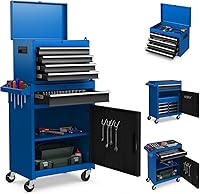
The Goplus 5-Drawer Rolling Tool Cabinet combines a wheeled base with a detachable top toolbox. Its overall dimensions are 23.5 x 11 x 40 in, and two of its four wheels have brakes.
This style can suit someone who wants a top box for a smaller working kit and a lower cabinet for other tools. Measure the route to the work area and the space needed to open the drawers.
Stackable tool systems
Stackable systems use separate cases or boxes that connect or sit together. They can make sense when you want to carry only one module, store a kit in a vehicle, or expand storage over time.
Their shape and connection methods vary. Compare the sizes of each module and how the system moves, then see rolling tool box systems that stack for examples.
How do you choose a tool chest size?
Choose a size by measuring your tools, your available space, and the chest’s usable drawer dimensions. A tall cabinet may hold more, but it can be awkward in a tight garage or too large for a small tool set.
Start with the largest tools you plan to store. Check drawer height for items such as hammers or power tools, and drawer depth for long wrenches or pry bars.
Next, measure where the chest will sit and how you will move it into place. Leave enough clearance to open drawers fully and walk around the unit.
The 4-Drawer Lockable Steel Rolling Tool Cabinet measures 13 x 26.8 x 29.8 in and has four wheels, two of which lock.
It may fit a lower workspace than a taller cabinet, but measure the footprint and drawer clearance before choosing a spot. See tool chests for a home garage for more sizing considerations.
What should you store in each drawer?
Store tools by type and frequency of use, with heavy items in lower drawers when the chest design allows it. This can make common tools easier to find and reduce the effort of reaching into a deep drawer.
Keep sockets together by size, and group wrenches so you can see their lengths and openings. Small organizers or liners can help prevent items from sliding around, but leave enough room to close each drawer without forcing it.
Put rarely used or bulky tools in lower or deeper storage. Keep sharp edges covered and avoid placing heavy tools where they could fall when a drawer opens.
Is a tool chest the same as a tool cabinet?
A tool chest and a tool cabinet are closely related storage units, and the names can overlap. In general, “chest” often refers to a smaller drawer unit or portable top box, while “cabinet” often means a larger floor unit.
The more useful comparison is how each unit fits your tools and workspace. Check the height, drawer dimensions, mobility, and whether one piece sits on top of another.
For a more detailed comparison, read tool chest vs tool cabinet. If you need a portable work surface rather than enclosed drawers, compare a chest with a tool cart.
Which tool chest type should you choose?
Choose a portable chest if you carry a small tool set, a rolling cabinet if tools need to move around your workspace, or a stackable system if you want separate modules. Measure your largest tools and the space before settling on a size.
For a fixed garage setup, start with the full tool chest buying guide. If you already own a chest, organize its drawers around the tools you use most so the layout stays practical.
Frequently asked questions
What is the difference between a tool chest and a toolbox?
A toolbox is usually a portable container with a handle and one main storage area, while a tool chest usually has drawers, trays, or several compartments. The terms overlap, so compare how the unit opens, how much it holds, and whether it has wheels or a carrying handle.
What is the difference between a tool chest and a tool cabinet?
A tool chest often means a smaller drawer unit or a top box, while a tool cabinet usually means a larger floor-standing unit with more storage. Names vary by brand, so check the dimensions, drawer layout, and whether the unit is meant to sit on a bench or roll across a floor.
How do I choose a tool chest size?
Measure the tools you want to store, the available floor or bench space, and the route through doorways. Compare drawer depth and height with your largest tools, then leave room to open drawers fully.
A compact chest may suit a small kit; a rolling cabinet can hold more but takes more space.
Are rolling tool chests worth it?
A rolling tool chest can help if you move tools around a garage or workshop and want several drawers in one unit. Check wheel locks, handle placement, and how the drawers stay shut while moving.
For a fixed workbench or a small kit you carry by hand, a portable chest may be simpler.