Tool Chest vs Tool Cart for a Home Garage: Which Is Better? (October 2026)
Choose a tool chest for enclosed, sorted storage; choose a tool cart for quick access to tools while you work. Your garage space, tool mix and need to move supplies around should guide the choice.
On this page (8 sections)
Choose a tool chest for enclosed, sorted storage; choose a tool cart for quick access to tools while you work. In a home garage, the right tool chest vs tool cart choice depends on whether you value organized drawers or open trays beside your project.
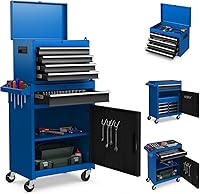
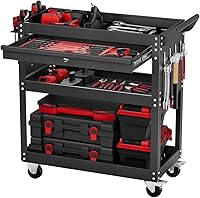
A chest such as the INTERGREAT has 8 drawers in 3 sizes, a bottom cabinet and a detachable top box. The VEVOR cart has 3 trays, one lockable drawer and side pegboards with hooks.
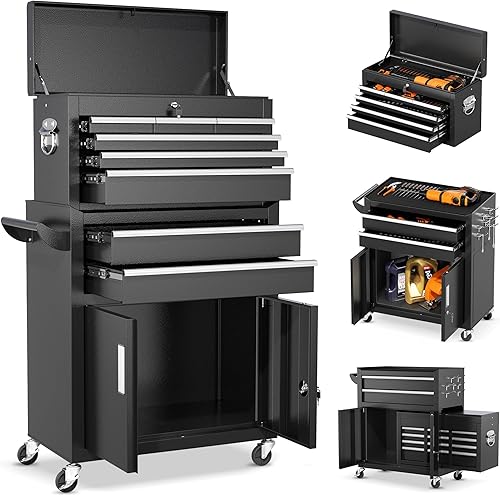
The Ironton cart takes a different approach, with 2 locking drawers and a top that opens to a large storage area. Here’s how these layouts fit different garage habits.

Tool chest vs tool cart: which should you choose?
Pick a chest if you want many enclosed spaces for sorting tools; pick a cart if you want open trays near your work. Both styles can roll, so storage layout is the bigger difference.
The INTERGREAT chest has 8 drawers: 2 large, 3 medium and 3 small. Its top box detaches from the bottom cart, and the bottom cabinet adds enclosed space.
The VEVOR combines 3 open trays with one lockable drawer. Side pegboards and hooks make some tools easy to see and reach without opening a drawer.
The Ironton has 2 drawers, an open lower tray and a top that slides open to a large storage area. When closed, the top can serve as a work area.
How does each storage layout work in a garage?
Drawers help separate tools by type, while trays and pegboards make frequently used items easier to spot. Choose based on how you put tools away between jobs.
When does a tool chest make more sense?
A chest suits a collection you want to sort into separate drawers. You can group sockets, wrenches, measuring tools and small parts by task or size.
The INTERGREAT chest includes liners in its drawers and has 8 hooks beside the cabinet. Its bottom shelf can be adjusted or removed to make room for different tool sizes.
If you already own drawer organizers, the chest layout can give them a dedicated place. These guides to organizing tool chest drawers and storing sockets in a tool chest offer practical ways to keep small tools from shifting.
When does a tool cart work better?
A cart suits a job where you want tools visible and within reach. Open trays let you set down supplies during work, while side pegboards can hold selected tools.
The VEVOR has 3 trays and a lockable drawer, with hooks on both side pegboards. The Ironton offers a lower tray and a top that opens to storage, so you can choose between a visible work surface and covered space.
Open storage can collect dust and makes it easier for small items to be knocked off. Put loose parts in the drawer or a separate organizer rather than leaving them on a tray.
For help choosing a cart layout, compare the options in our guide to the best rolling tool carts for a garage or shop.
How much room do a chest and a cart need?
Measure the parking area and the route you’ll use to roll the unit before choosing. Cabinet dimensions don’t include extra room to turn, open drawers or work beside the cart.
The INTERGREAT chest measures 13 x 24.13 x 42.5 in. The VEVOR measures 13.8 x 32.7 x 32.5 in, while the Ironton measures 30.5 x 14.5 x 33 in.
The chest is taller, while the carts have different footprints. Check the dimensions against your garage shelves, parked vehicle, workbench and walking path.
Use tape on the floor to mark the unit’s footprint. Then check that drawers, the Ironton’s top and nearby doors can open without hitting a wall or another object.
If you want a fixed drawer unit for a garage workshop, see our guide to tool chests for a home garage. It covers how to match a chest to your available space and storage needs.
Which one is easier to move?
A cart is a natural fit when you regularly bring tools to different work areas; a chest can work when it stays near a main bench. Either option needs a clear path and stable parking spot.
The INTERGREAT has 4 universal casters, all with brakes. Its top box has handles, and the chest can be separated into a top box and bottom cart.
The VEVOR has 2 swivel and 2 fixed wheels, with 2 casters that have brakes. The Ironton rolls on 4 in casters.
Moving a loaded unit can feel different from rolling it empty. Keep heavy items low, use the brakes while working and avoid routes with cords, clutter or uneven transitions.
Which option keeps tools secure?
A chest with drawers and a lockable cart drawer can both cover selected tools, but their storage layouts differ. Think about which tools need to be put away between jobs.
The INTERGREAT has an independent locking system for its top and bottom sections. The VEVOR has one lockable drawer, and the Ironton has two locking drawers plus an internal keyed lock for its top storage.
These features provide places to secure tools, but they don’t make every compartment equally enclosed. The VEVOR’s trays and pegboards remain open, so keep items there only when you’re comfortable leaving them visible.
Do you need a chest and a cart?
You may benefit from both if you want a main storage station and a smaller set of tools beside the job. Keep the chest for sorted storage and use a cart for the tools and supplies needed for a current task.
A cart can reduce trips back to the workbench when a project uses the same tools for several steps. Afterward, return them to the chest so they don’t spread across the garage.
If you’re setting up a cart around your existing tools, our guide to setting up a rolling toolbox explains how to group tools and keep frequently used items accessible.
Which tool chest or cart fits your garage?
Choose the INTERGREAT chest for 8 drawers and a detachable top, the VEVOR cart for 3 trays and side pegboards, or the Ironton for a top that opens into storage. Match the layout to your tools, working habits and available floor space.
Our score weighs specs and features against what you’re shopping for. Choose a chest when drawer organization matters most, or a cart when you want tools close at hand and easy to move.
Related tool storage guides
- Tool chest vs tool cabinet
- Best rolling tool cart
- Best tool chest for a home garage
- How to set up a rolling toolbox
Frequently asked questions
What is the main difference between a tool chest and a tool cart?
A tool chest puts tools in drawers or enclosed compartments, while a tool cart often combines open trays with a smaller number of drawers. A chest helps sort and cover more tools; a cart keeps common tools visible and easy to move near your work.
Is a tool cart better for a small garage?
A cart can suit a small garage if you need to roll tools into the work area and can park it elsewhere afterward. Check its full footprint and turning space first.
A chest may be easier to keep as one fixed storage station, depending on your layout.
Can a tool cart replace a tool chest?
A cart can replace a chest if you own a modest tool set and prefer open access. For a larger collection that needs sorted drawers and enclosed storage, a cart may leave you short on protected space.
The VEVOR has 3 trays and 1 drawer; the INTERGREAT chest has 8 drawers.
Should a tool chest or cart have wheels?
Wheels help when you need to move storage around the garage, but they still need a clear route and a place to park. Check which casters have brakes and use them when the unit is stationary.
If storage stays in one spot, mobility may matter less than drawer layout.
Which tool storage is better for hand tools?
A drawer chest usually makes it easier to group hand tools by type and size, especially when it has several drawer sizes. A cart works well for tools you use in the current job, with trays and hooks keeping them close.
Many garages benefit from using both roles.