Tool Chest vs Tool Cabinet: Which One Do You Need? (October 2026)
Choose a tool chest for organized drawers and a cabinet for tall, mixed storage. A tool chest vs tool cabinet decision depends on the tools you own, how you reach them and how much floor space you can give storage.
On this page (10 sections)
- Tool Chest vs Tool Cabinet: Which One Do You Need?
- Tool chest vs tool cabinet: what is the main difference?
- Which one fits a home garage?
- Which layout keeps hand tools easier to find?
- When does a cabinet with shelves make more sense?
- Which storage unit is easier to move?
- Which option gives you better security?
- How should you choose between the three?
- What should you measure before buying?
- Which should you choose?
Tool Chest vs Tool Cabinet: Which One Do You Need?
Choose a tool chest for sorted hand tools and a cabinet for taller, mixed storage. The tool chest vs tool cabinet choice comes down to what you store, how you access it and the space available in your garage.
A chest often puts drawers at the center of its layout. A cabinet may add shelves, doors or a wider set of drawers, so compare the exact storage arrangement instead of relying on the name alone.
This comparison looks at a compact detachable chest, a tall cabinet with shelves and a wide rolling cabinet with nine drawers.
 Best for split storage
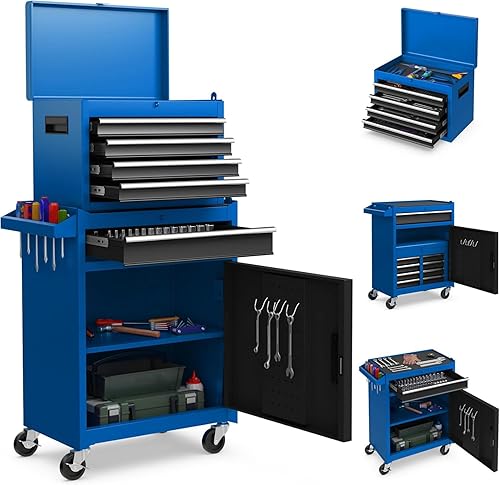
Goplus 5-Drawer Rolling Tool Chest with Detachable Top
Tool chest vs tool cabinet: what is the main difference?
A tool chest makes drawer access its main job; a cabinet can store tools and larger supplies behind drawers, doors or shelves. Choose based on the shape and frequency of use of your tools.
A drawer layout helps separate small items such as sockets, wrenches and screwdrivers. You can assign each drawer a tool type, then find it without moving larger items.
Cabinets suit a broader mix. Shelves can hold containers and bulky supplies, while doors keep them enclosed; drawer space still varies from one cabinet to another.
The terms aren't used consistently across brands. Check the dimensions, number and type of storage spaces, and whether the unit is meant to roll, stay in one place or connect with another piece.
For a closer look at the basic parts and types, see what a tool chest is and how its parts work.
Which one fits a home garage?
Choose the unit that fits your wall, ceiling and working clearance, not just the one with more storage. A cabinet's height and a chest's drawer space both affect how you'll use the rest of the garage.
A compact chest can fit under some benches or beside a work area, but its drawers still need room to open. Measure the unit and mark the footprint on the floor before setting it beside a car, bench or doorway.
A tall cabinet uses vertical space, which may leave more open floor area. Check the ceiling, shelves and overhead doors, and leave enough room to open its doors or drawers.
A wide cabinet can take up a long stretch of wall. The WEN measures 52 x 18 x 37 in, so measure a clear wall section and the space needed to stand in front of it.
Which layout keeps hand tools easier to find?
A chest or drawer-heavy cabinet works well when you want to sort small tools into separate spaces. A shelf-and-drawer cabinet suits a mix of tools and supplies that don't all fit neatly in shallow drawers.
Plan drawers around the work you do. Keep daily tools in the easiest-to-reach spaces and group less-used tools below or in a separate cabinet.
The Goplus has 5 drawers and 2 trays, plus a detachable top toolbox. You can keep the top box with the rolling chest or detach it for separate use.
The WEN offers 9 lockable soft-close drawers in a 52 in wide cabinet. Its drawer sizes include both shallower spaces and deeper drawers, which helps if your tool collection includes items of different heights.
For a setup that helps tools stay in place, use these tool chest drawer organization steps. If sockets make up much of your collection, socket organization ideas for a tool chest can help you plan a dedicated space.
When does a cabinet with shelves make more sense?
Choose shelves when you need space for larger supplies, containers or equipment that don't belong in small drawers. A tall storage cabinet can handle a wider mix than a drawer-only setup.
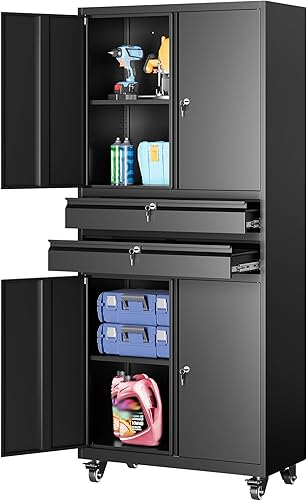
The Metal Rolling Garage Cabinet with Drawers measures 73 x 31.5 x 15.8 in and includes 2 adjustable shelves and 2 drawers. The shelves can accommodate larger items, while the drawers separate smaller supplies.
Its 73 in height makes it important to check overhead clearance before choosing it. It has four wheels and keyed locks, so consider both the route for moving it and where you want it secured.
A cabinet with shelves is less useful if most of your tools are small and need to stay sorted by type. In that case, a chest or wide drawer cabinet can make daily access simpler.
Which storage unit is easier to move?
A rolling unit is easier to reposition across a suitable floor, but size and weight still matter. Check the wheel setup and the path before moving a loaded chest or cabinet.
The Goplus has four universal wheels, two with brakes. A locking bar helps keep drawers and the cabinet door from opening while the unit rolls.
The tall Metal Rolling Garage Cabinet has four wheels. At 110 lb, it will still take planning to move, especially through narrow turns or over an uneven floor.
The WEN cabinet weighs 212 lb and has casters rated for a 1500 lb capacity. Its weight makes placement worth planning before you load the drawers.
For a more mobile, open setup, compare a tool chest and tool cart for a home garage. If a cabinet on wheels is the better fit, see the guide to rolling tool cabinets with drawers.
Which option gives you better security?
Look for a locking setup if the tools need to stay closed while stored or moved. Check whether the unit locks drawers, doors or both.
The Goplus includes a lock bar that helps keep drawers and the cabinet door from opening while rolling. Its lock type is listed as key.
The tall Metal Rolling Garage Cabinet has keyed locks and magnetic door closures. That combination is useful if you want enclosed storage for tools and other supplies.
The WEN has nine lockable drawers and includes a set of keys. A locking drawer bank keeps the storage focused on hand tools rather than shelves and doors.
No lock replaces sensible placement. Keep the unit where you can control access, and follow the instructions for using the lock and securing the cabinet.
How should you choose between the three?
Choose the Goplus for a compact chest with a detachable top, the tall metal cabinet for shelves, or the WEN for a wide drawer bank. The right pick is the one whose layout matches your tools and room.
Pick the Goplus if you want to move a smaller set of tools or separate the top box from the rolling base. Pick the tall cabinet if shelves are a priority and you have clearance for a 73 in unit.
Pick the WEN if a long wall and organized drawers matter most. Its nine drawers give more dedicated drawer spaces than the other two options here, though the 52 in width and 212 lb weight call for a planned location.
What should you measure before buying?
Measure the storage location, access path and open-drawer clearance before you choose. A cabinet that fits its parking spot may still block a doorway or workbench when in use.
Record width, depth and height for the unit's planned location. Then measure doorways, corners and any floor transitions between the delivery point and garage.
Mark the unit's footprint with tape and open the drawers or doors in the marked area. Leave enough standing room to take tools out without shifting other equipment.
Consider what belongs inside each storage section. If most of your tools are small, assign drawers before shopping; if you have tall containers or larger supplies, check shelf spacing and cabinet depth.
Which should you choose?
Pick a tool chest for drawer-based hand-tool storage, and pick a cabinet when you need shelves or a wider mix of storage. Choose a combined setup if both jobs matter and your garage has room for it.
The Goplus is the compact choice with a detachable top. The tall metal cabinet gives you adjustable shelves, while the WEN offers a wide nine-drawer layout.
After choosing the shape, plan the contents with a practical tool chest drawer layout. That will help you use the storage you buy and keep frequently used tools easy to reach.
Frequently asked questions
What is the difference between a tool chest and a tool cabinet?
A tool chest usually focuses on drawers for sorting hand tools, while a tool cabinet can include drawers, shelves or enclosed space for larger supplies. Names vary by brand, so compare the layout, dimensions and mobility of each exact unit before you choose.
Should I buy a tool chest or a cabinet first?
Start with a tool chest if your main problem is finding small hand tools in a drawer layout. Choose a cabinet first if you need tall storage for larger supplies and have room for its height and footprint.
Can a tool chest and cabinet be used together?
Yes. A chest can hold frequently used hand tools while a cabinet stores larger equipment and supplies.
Some systems are designed to stack or connect, but separate units may not fit or attach safely, so check the maker's instructions before combining them.
How much room should I leave for a rolling tool cabinet?
Measure the cabinet footprint and leave room to open drawers fully, stand in front and move it into position. Check the height against shelves and garage doors, and measure the route through doorways and turns before delivery.