How to Remove Drawers from a Homak Tool Chest
To remove drawers from a Homak tool chest, empty the drawer, pull it out until the slide release shows, press or lift the tab on each side, and slide it free. On models without a release tab, remove the drawer stop screw or bend the metal stop before pulling the drawer clear.
On this page (13 sections)
- How do you prepare a Homak tool chest for drawer removal?
- Where is the drawer release on a Homak tool chest?
- How to remove drawers from a Homak tool chest with release tabs
- How to remove a drawer without release tabs
- How do you pull a drawer past a friction slide stop?
- How do you reinstall a drawer in a Homak tool chest?
- What should you check after removing Homak drawers?
- Do you need to remove drawers to add a liner or organizer?
- Can drawer removal damage the slides or the chest?
- What if your Homak chest uses a different drawer style?
- What about drawers in a portable tool chest?
- How do you keep a Homak drawer from sticking after reinstall?
- Which drawer setup fits a Homak chest?
To remove drawers from a Homak tool chest, empty the drawer, pull it out until the slide release shows, press or lift the tab on each side, and slide it free. On models without a release tab, remove the drawer stop screw or bend the metal stop before pulling the drawer clear.
The steps below cover the common Homak drawer types. Most chests use one of three setups: a side-release tab, a stop screw at the back of the slide, or a friction slide with a bent metal stop.
Match your chest to the right method before you pull.
How do you prepare a Homak tool chest for drawer removal?
Empty the drawer and park the chest on a flat, stable surface first. A loaded drawer is heavier than it looks, and the chest can tip when several drawers are open.
Clear the top of the chest so nothing falls into the open cavity. Lock the casters if your chest has them, or chock the base so it can't roll while you work.
Take the tools out and set them in a tray in the order you want them back. A drawer that holds sockets or wrenches is easier to reload when the sets stay grouped.
Our guide to how to organize wrenches shows a simple order for the reload.
Check the drawer slides for a brand sticker or stamp. Homak chests sold under the Homak name use several slide designs, so the release method depends on the slide, not just the chest size.
Where is the drawer release on a Homak tool chest?
The release is on the slide, just behind the drawer front, on most Homak chests. Pull the drawer almost all the way out and look for a small plastic tab or metal lever on each side.
On ball-bearing slides, the tab is usually a black or yellow plastic lever that you press down or lift up. The tab sits on the inner slide, close to the drawer box.
Some Homak chests use a slide with a visible release button that you squeeze between your thumb and finger. Others use a small metal catch that you push to one side.
If you don't see a tab, look along the slide for a screw head near the back. That screw often holds a stop that blocks the drawer from coming all the way out.
Hold the drawer with one hand while you look, so it doesn't slide shut.
How to remove drawers from a Homak tool chest with release tabs
Press both release tabs at once and pull the drawer straight out. The drawer needs to come out evenly; pulling one side first can jam the slide.
- Pull the drawer out until it stops and the release tab appears.
- Press or lift the tab on the left slide with one hand.
- Press or lift the tab on the right slide with the other hand.
- Keep both tabs pressed and pull the drawer straight toward you.
- Lift the drawer clear and set it down on a soft surface.
The tabs release the drawer box from the slide, so the slide stays in the chest. You'll see the inner slide rail left behind, and that's normal.
A drawer with two people is easier on deep drawers; one holds the front while the other works the tabs.
How to remove a drawer without release tabs
Take out the stop screw or flatten the bent metal stop at the back of the slide. Homak chests without a tab use a mechanical stop to keep the drawer from sliding out.
Open the drawer until the stop is visible near the back of the slide. A stop screw sits in a small bracket and comes out with a screwdriver.
Keep the screw in a cup so it doesn't roll under the chest.
Some slides use a bent metal tab instead of a screw. Bend the tab up or flat with pliers so the drawer can pass over it.
Bend it back when you reinstall the drawer, so the drawer still stops in normal use.
Pull the drawer straight out after the stop clears. The drawer box slides off the end of the rail once the stop is out of the way.
Hold the drawer level so the slide doesn't drop.
How do you pull a drawer past a friction slide stop?
Tilt the drawer slightly and lift as you pull, or press the plastic stop tab if the slide has one. Friction slides are simpler than ball-bearing slides and have fewer release parts.
Grip the drawer front with both hands and pull until it stops. Push down on the drawer front and pull at the same time, or lift the front edge to clear the stop.
Some friction slides have a small plastic tab at the back that you press with a finger. Others need a firm pull with a slight upward angle.
Don't yank; steady pressure works better.
If the drawer won't clear the stop, look behind it with a flashlight. A bent tab or a loose screw may be blocking the drawer.
Stop before you force it and check the slide.
How do you reinstall a drawer in a Homak tool chest?
Line up both slides, push the drawer in evenly, and let the release tabs click into place. Reinstall the drawer before you reload tools so you can test the glide.
Hold the drawer level and guide the inner slide into the rail on each side. Push straight in until the drawer meets the cabinet.
For tab-style slides, push until you hear or feel both tabs click. Tug the drawer front gently to confirm it's locked.
A drawer that pulls straight out without stopping is not seated.
For stop-screw slides, slide the drawer in fully and refit the stop screw or bend the tab back into place. Check the drawer opens and closes smoothly before adding weight.
If the drawer binds, pull it out and try again. A slide that isn't seated on one side causes the drawer to run crooked.
Line up the slide by eye before pushing.
What should you check after removing Homak drawers?
Check the slide tracks, the drawer box and the cabinet cavity for damage or debris. Removing a drawer is the easiest time to clear dust and small parts from the rails.
Wipe the slides with a dry cloth and pick out metal shavings or sawdust. A light dry lubricant helps ball-bearing slides, applied sparingly so dust doesn't cling.
Look for a bent slide, a loose bracket screw or a cracked drawer box. A drawer that wobbles after reinstall usually has a slide seated wrong or a loose screw.
A drawer liner makes the drawer easier to reload and keeps tools from sliding when the chest moves. A fresh liner also hides scuffs on the drawer bottom.
See how a liner fits into a full setup in our guide to how to organize tool chest drawers.
Do you need to remove drawers to add a liner or organizer?
No, but pulling the drawer makes a liner easier to cut and fit. A drawer on a bench is simpler to measure than one still in the chest.
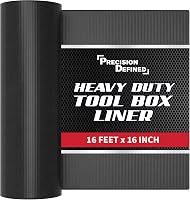
The Precision Defined liner comes as a 16 ft x 16 in roll with grid lines for straight cuts. Cut the liner with a razor blade, following the grid, and lay it flat in the drawer.
The memory foam-like material grips tools and stays put.
Measure the drawer's inside width and depth before cutting. Allow the liner to sit flat for a while before loading heavy tools on top.
A liner that runs up the drawer sides will catch as the drawer closes.
Skip the liner if your drawer already has a factory mat in good condition. A liner helps most when tools slide around or when you want to protect a painted drawer bottom from scratches.
Can drawer removal damage the slides or the chest?
Not if you press the releases and keep the drawer level. Most damage comes from forcing a drawer past a stop or pulling one side first.
Never pry a stuck drawer with a screwdriver against the cabinet. That bends the drawer front and can scratch the paint.
Work the release tab or stop, then pull.
Don't let a full drawer hang open on its slides. The slide is designed for a drawer that's loaded and closed, and a hanging load can bend the rail.
Keep the drawer stop parts together when you remove them. A lost stop screw lets the drawer slide out when the chest rolls.
A small cup or bag keeps the parts safe until reinstall.
If the drawer still won't come out after the stop is clear, stop and check for a second stop or a bent tab. Forcing it can break the plastic slide end.
What if your Homak chest uses a different drawer style?
Check the slide for a brand stamp or a release tab before you force anything. Homak chests cover several drawer designs, and some use slides with a hidden release.
Some slides need you to lift the drawer front while pulling. Others use a release tab at the front corner instead of the back.
Look at the slide end near the drawer front as well as the back.
If the drawer still resists, look for a screw at the cabinet's back panel that holds the slide. That screw may be the drawer stop on some models.
A drawer slide that looks different from the steps above may need a gentle pull with a slight lift. Compare your slide to the steps and pick the closest match.
A quick look with a flashlight often finds the release.
The method for other brands follows the same idea. If your chest is a Kobalt, our guide to how to remove drawers from kobalt tool chest covers its slide release.
What about drawers in a portable tool chest?
Portable chests often use simpler friction slides with a front stop. The steps are similar: empty the drawer, find the stop, and pull straight out.
A portable chest on a bench is easier to work on than a full cabinet. Set the chest on a flat surface so it can't slide while you pull.
Empty the drawer first, then look for the stop at the front or back of the slide.
Portable chests are also a good place to try a liner or organizer before you set up a larger cabinet. See our picks for a portable tool chest if you want a smaller chest with drawers that come out easily.
How do you keep a Homak drawer from sticking after reinstall?
Keep the drawer light and the slides clean, and check that both slides are seated. A sticking drawer usually points to a slide that's off its rail or a load that's too heavy for the slide.
Clean the rails with a dry cloth and remove dust and grit. A light dry lubricant helps ball-bearing slides run smoothly.
Don't use thick grease, which traps dust.
Spread the load across the drawer instead of piling tools in one corner. A drawer that sags at the front has too much weight or a slide seated wrong.
Check that the drawer stop is back in place. A drawer without its stop can slide out and jam against the cabinet when it closes.
A quick tug on the front confirms the lock.
For the tools inside, a magnetic holder keeps wrenches from rolling and makes reloading faster. A holder also lets you lift a whole set out at once.
Our comparison of portable tool chests covers which models use drawers that come out for cleaning.
Which drawer setup fits a Homak chest?
For anyone learning how to remove drawers from a Homak tool chest, the release tab is the easiest design to work with. A tab-style slide comes out with two fingers and goes back with a click.
The DeWalt ToughSystem 2.0 3-Drawer Unit uses ball-bearing metal slides that open and close smoothly. Its three drawers hold 43.5 lb each and connect to other ToughSystem modules.
It's a good choice if you want drawer access without pulling the whole unit apart.
If your Homak chest has a stop screw instead of a tab, keep the screw in a cup and check the tab clicks on reinstall. A liner and a magnetic holder make the reload faster, and both come out with the drawer when you need the space empty.
Pick a drawer liner if tools slide, and a magnetic holder if your wrenches and sockets roll. Check the slide type first, then pull straight and keep the drawer level.
That's the whole job.
Frequently asked questions
Do I need to take the drawer out to clean a Homak chest?
No. Wipe the drawer in place with a damp cloth and reach the corners with a small brush.
Pull the drawer only when you need to reach the slide, replace the liner, or move the chest.
What if a drawer comes out but won't go back in?
Line up both slides evenly and push straight in until the release tab clicks. If one side binds, pull the drawer out again and check that the slide is seated in its rail before pushing.
Can I remove more than one drawer at a time?
Yes, but empty and remove one drawer at a time. A chest with several drawers pulled forward can tip, especially when it sits on a slope or the top is loaded.
Should I oil the slides after putting a drawer back?
A light dry lubricant on the slide track helps drawers run smoothly, and ball-bearing slides need very little. Wipe away excess so dust and grit don't stick to the track.