How to Organize Wrenches in a Tool Chest Drawer
To organize wrenches in a tool chest drawer, sort them by measurement system and size, then arrange them in a holder that keeps each wrench easy to spot and lift. Test the layout with the drawer closed before settling on it.
On this page (7 sections)
- How do you sort wrenches before arranging them?
- Which layout works best for a wrench drawer?
- How should you keep wrench holders in place?
- How do you keep metric and SAE sets easy to tell apart?
- How can you organize a large or mixed wrench collection?
- How do you check a wrench drawer setup?
- What is the best way to organize wrenches in a toolbox?
To organize wrenches in a tool chest drawer, sort them by measurement system and size, then arrange them in a holder that keeps each wrench easy to spot and lift. Test the layout with the drawer closed before settling on it.
Start by removing the wrenches and checking how much usable drawer space remains. A good setup gives each wrench a place, keeps metric and SAE tools distinct, and leaves room to lift tools without moving the row.
How do you sort wrenches before arranging them?
Separate metric and SAE wrenches first, then order each group by size. This keeps similar-looking sizes from getting mixed and makes it easier to notice a missing wrench.
Lay the tools out on a clear surface. Group combination, open-end, ratcheting, offset, stubby, and adjustable wrenches separately if their shapes make them awkward to store together.
Check the drawer's width, depth, and height, including any handle or lip that could catch a holder. Leave enough room for the drawer to open and close without the wrenches rubbing against the cabinet above.
Which layout works best for a wrench drawer?
Choose a layout that makes sizes easy to read and leaves each wrench easy to remove. A single row works well when the drawer is wide; split rows can use a wider drawer more efficiently if the wrench heads don't overlap.
Keep the smallest tools together and largest tools together, but avoid crowding them into a tight sequence. Leave small gaps where a handle or head needs extra clearance to lift out cleanly.
If you also store sockets in the chest, give them a separate section instead of mixing them between wrench rows. Our guide to organizing sockets in a tool chest covers a dedicated socket layout.
How should you keep wrench holders in place?
Use holders that fit the drawer and stay put when it moves. Magnetic bases can attach to metal drawers; for other surfaces, choose a fitted tray or a holder that sits flat and is easy to reposition.
Clean out grit and oil before placing organizers. A layer of debris can keep a base from sitting evenly and can make tools harder to return to their slots.
The DEHOYI 48-piece organizer is designed for wrenches from 6 mm to 38 mm or ¼ in to 1 ½ in. Its modular holders support several wrench types, and the included labels help identify sizes.
Choose it if you want to build a row around the set you own. Check the drawer length before arranging the holders, since a modular set still needs enough space for the complete layout.
When does the Ernst Wrench Pro suit a drawer?
The Ernst Wrench Pro suits a drawer when you want a modular holder with labeled positions and a magnetic base. It fits wrenches from 6 mm to 38 mm or ¼ in to 1 ½ in and is designed for offset, combination, open-end, stubby, and ratcheting styles.
Its modular design lets you configure the holder around the number of wrenches in a set. Ernst lists a 40-tool capacity, so compare that with the number of tools you plan to store.
Choose another style if you need fixed slots or want color-coded boards. Before committing, set the holders in the drawer and confirm you can lift out the largest wrench without catching the next one.
How do you keep metric and SAE sets easy to tell apart?
Give metric and SAE wrenches separate, labeled areas. Keep each group in ascending size order and use the holder's labels when available.
If you prefer color as a cue, use it consistently across the drawer. Don't rely on color alone if you share the toolbox or use several sets with similar handles.
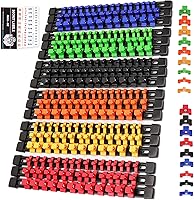
The SWANLAKE set includes red and blue boards with separate slot ranges. Its four organizers include two 15-slot and two 12-slot boards, with slots for specified metric and SAE sizes.
This set is a fit for drawers where fixed rows and color cues are helpful. Check the wrench sizes against its slot ranges, which run up to 27 mm and 1 1/16 in on the 15-slot boards.
Its magnetic boards can also be carried by hand or mounted on a wall. Choose a different layout if you need modular spacing for unusual wrench shapes or a broader size range.
How can you organize a large or mixed wrench collection?
Use modular holders when your set has many sizes or a mix of wrench shapes. Separate specialty tools from the main size-ordered rows so they don't interrupt the everyday sequence.
The DEHOYI 80-piece set includes 40 black and 40 red holders and is designed for wrenches from 6 mm to 38 mm or ¼ in to 1 ½ in. Its modular pieces can be combined to fit different wrench types.
Choose it if the larger number of holders suits your collection and drawer space. Make a paper layout first, especially if you plan to keep other tools in the same drawer.
Avoid filling every open space just because the holders allow it. A little room around handles makes tools easier to lift and reduces the chance that one wrench will dislodge another.
How do you check a wrench drawer setup?
Open and close the loaded drawer slowly, then check that each tool stays in place and can be removed cleanly. Repeat the check after moving the chest, since vibration can expose a loose arrangement.
Make sure no wrench sits above the drawer sides or blocks the cabinet from closing. Check that the largest handles don't collide with the row beside them.
For the rest of the drawer, organize tool chest drawers so tools stay put with separate zones for different tool types. If your tools live in a rolling box, rolling tool box organization ideas can help plan the larger layout.
What is the best way to organize wrenches in a toolbox?
The best way to organize wrenches in a toolbox is to separate metric from SAE, order each group by size, and use a holder that fits the drawer and wrench shapes. Choose DEHOYI's 48-piece set or Ernst Wrench Pro for modular spacing, SWANLAKE for color-coded fixed slots, or DEHOYI's 80-piece set for a larger collection.
Measure the drawer and test the layout before filling it. For a broader setup plan, see how to set up a rolling tool box.
Frequently asked questions
What is the best way to organize wrenches in a toolbox?
Sort wrenches by system, then by size, and place each in a holder that keeps it visible and easy to remove. Keep metric and SAE sets in separate rows or sections, label them if the holder supports labels, and check that drawer movement does not shift the tools.
Should wrenches be stored flat or upright?
Use whichever position keeps the wrench handles and heads accessible without stacking tools on top of one another. Flat storage can work in a shallow drawer when each wrench has its own slot; upright storage can save space if the holder supports the wrench securely and the drawer closes freely.
How do you keep wrench organizers from moving in a drawer?
Start with a clean, dry drawer and arrange the holders so their bases sit flat. Magnetic holders can attach to a metal drawer, while nonmagnetic holders may need a fitted tray or other stable surface; test the drawer gently before loading it with other tools.
How should metric and SAE wrenches be arranged?
Keep metric and SAE wrenches in separate, clearly marked groups, then order each group from smallest to largest. This reduces mix-ups between near-sized tools and makes it easier to return a wrench to its place after a repair.