Is a Tool Chest With a Power Strip Worth It?
A tool chest with a power strip is worth it if you charge batteries or plug in tools near your chest and want fewer trips to a wall outlet. Skip the built-in power if your work area already has enough outlets or you need the strip somewhere else.
On this page (7 sections)
- Is a tool chest with a power strip worth it for your shop?
- What does built-in power add to a tool chest?
- When is a separate magnetic strip a better fit?
- Which chest with a power strip fits your setup?
- How should you plan the power cord and outlet?
- What should you compare before you buy?
- Should you choose integrated or separate power?
A tool chest with a power strip is worth it if you charge batteries or plug in tools beside your chest and want fewer trips to a wall outlet. It adds convenience at the work area, but it doesn't create another circuit or solve a shortage of outlets in the room.
The right choice depends on your routine. If chargers and corded tools stay near the chest, integrated outlets can keep them close; if your setup changes often, a separate magnetic strip may fit better.
Is a tool chest with a power strip worth it for your shop?
Yes, when you regularly use power beside the chest and can route its cord safely to an outlet. Built-in outlets can keep chargers and small tools within reach while your storage stays in one place.
The benefit is less movement between a work surface and a distant outlet. That convenience matters most when you charge batteries, use a corded tool at the chest, or work in a garage where outlets are not next to the storage area.
An integrated strip still needs to connect to a wall outlet. Check the cord length and your planned chest position before buying, and follow the instructions for the chest, power strip, and tools you connect.
If you mainly need organized storage, start with our guide to the best tool chest for a garage. A power strip is a useful extra, but drawer layout, size, and mobility should still match your tools.
What does built-in power add to a tool chest?
Built-in power keeps outlets close to stored tools and chargers. The useful details to compare are outlet count, USB ports, cord length, and whether the chest itself fits your workspace.
The WORKPRO chest has an integrated strip with 6 outlets, 2 USB ports, and a 1.5 m cord. It also has 5 drawers, a cabinet door with an adjustable shelf, and a wooden top that can serve as a work surface.
The Craftsman rolling chest has 6 outlets and ports compatible with USB-A and USB-C connectors. Its features also include 4 drawers, liners, keyed internal locking, and pegboard sides for external storage.
These features can reduce clutter around a work area, but they don't make the chest a substitute for a dedicated workbench or enough wall outlets. Check where you plan to use it and how the cord can reach the outlet without crossing a walkway.
When is a separate magnetic strip a better fit?
Choose a separate magnetic strip if you want to place or move power independently of the chest. It can attach to steel, so you can position it where your chargers or tools are easiest to reach.
The DEWALT magnetic strip has 6 outlets, 2 USB ports, two rubber-coated magnets, and a 6.5 ft cord. Those magnets are intended for steel surfaces, so confirm the surface and placement before relying on them.
A separate strip also makes sense if you already own a chest you like. You can keep your storage choice and add power where it fits your workflow, as long as the cord reaches and the setup follows the manufacturer's instructions.
Our drawer setup guide can help you plan where frequently used tools belong. Keep the charging area clear of drawers and tools you need to reach often.
Which chest with a power strip fits your setup?
Pick a chest by balancing its storage layout and mobility with the power features you need. A tall cart, a broad chest with a worktop, and a separate magnetic strip serve different work areas.
Is a taller cart useful for charging and storage?
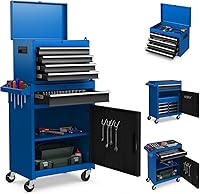
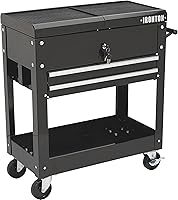
A taller cart may suit a workspace where vertical storage and a small footprint matter. The Mobile Tool Cart with Power Strip has 2 drawers, adjustable shelves, a perforated pegboard, a lockable cabinet, and an integrated strip.
Its listed dimensions are 16.5 in deep, 29.5 in wide, and 62.6 in high. Measure ceiling clearance and nearby shelves before choosing a tall cart, and check that the cord can reach your outlet from its parking spot.
Does a chest with a worktop suit your routine?
A broad chest with a worktop may suit you if you want a place to set tools or parts beside the drawers. The WORKPRO has a 1-3/8 in wooden top and 5 drawers, with an enclosed cabinet section for larger items.
Its listed dimensions are 58.6 in wide, 21.6 in deep, and 38.3 in high. The chest ships in 2 packages and requires self-assembly, so account for the room needed to assemble it and move it into place.
What if you need a smaller rolling chest?
The Craftsman chest is 30 in wide, 22 in deep, and 41.38 in high. It has 4 drawers, four swivel casters, a keyed internal lock, pegboard sides, and integrated outlets with USB-A and USB-C compatible ports.
Compare those measurements with your storage space and the route through your garage. For a broader look at rolling chests with pegboards, consider whether side storage will stay accessible once the chest is parked.
How should you plan the power cord and outlet?
Place the chest where its cord reaches a suitable outlet without creating a trip or snag hazard. Plan the route before loading the drawers, then check that the cord won't be pinched when the chest moves.
Keep the strip away from wet areas and avoid placing cords where wheels, drawer edges, or sharp tools can damage them. Follow the power strip and tool instructions, including any limits on what can be plugged in at once.
Don't connect one power strip to another. If you need more power than the chest's strip can safely provide, ask a qualified electrician about adding an outlet rather than improvising with extra strips.
A rolling chest can shift as you work or move it. Use the brakes where available, and unplug equipment before rolling the chest or changing its position.
What should you compare before you buy?
Compare the storage, size, mobility, and power layout together. A chest that holds your tools but blocks a walkway or leaves its cord short can make the shop harder to use.
- Drawer and cabinet space: Match drawer sizes and enclosed storage to the tools you own.
- Work surface: Decide whether you need a top for staging parts or prefer a narrower cart.
- Dimensions: Measure the parking spot, route through doorways, and overhead clearance.
- Outlets and ports: Check outlet count, USB options, and cord length.
- Mobility: Consider how often you move the chest and whether it has casters and brakes.
- Power placement: Choose integrated outlets for power that stays with the chest, or a magnetic strip when placement flexibility matters.
For drawer planning, see how to organize tool chest drawers. A clear layout makes it easier to keep tools accessible while reserving a sensible area for chargers.
Should you choose integrated or separate power?
Choose an integrated strip if charging and tool use happen beside the same chest every day, and the cord reaches your outlet cleanly. The WORKPRO and Craftsman offer built-in outlets, while the Mobile Tool Cart combines a strip with a taller storage layout.
Choose the DEWALT magnetic strip if you want to attach power to a steel surface and move it as your work area changes. If you already have enough outlets nearby, skip the extra power feature and focus on the chest that best fits your tools and space.
For a simple rule, buy integrated power when the chest is your regular charging station; choose a separate strip when power needs to move around the shop. If neither solves your outlet access, plan the outlet location before adding more storage.
Frequently asked questions
Is a tool chest with a power strip worth it?
Yes, if you regularly charge batteries or use corded tools beside the chest and the cord can reach a suitable outlet. Built-in outlets reduce trips across the shop, but they don't add power to a room or replace checking the strip and tool instructions.
A separate magnetic strip makes more sense if you want to move it.
Can you plug a power strip into a tool chest?
You can use a separate strip near a tool chest if its cord reaches a suitable wall outlet and the strip is placed where it won't be crushed, caught, or exposed to moisture. Follow the strip and tool instructions, and avoid connecting one power strip to another.
What should you check before buying a tool chest with outlets?
Check the outlet count, USB ports, cord length, chest dimensions, drawer layout, and how the cord will reach your wall outlet. Also consider whether you need to charge batteries beside the chest or would rather place a separate strip on a different steel surface.
Is a magnetic power strip better than built-in outlets?
A magnetic strip is useful when you want to attach power to a steel chest or move it to another steel surface. Built-in outlets keep the power source with the chest.
Choose based on where you work, how far the cord reaches, and whether you want the strip fixed or movable.