Rolling Tool Chest With Deep Drawers: What Fits Inside
A rolling tool chest with deep drawers suits tall hand tools, power tools, and larger parts that won't fit flat in shallow drawers. Check each drawer's usable depth and opening before deciding what to store inside.
On this page (9 sections)
- What fits in a rolling tool chest with deep drawers?
- How do deep drawers compare with shallow ones?
- How should you measure a drawer before filling it?
- How can you arrange tools in deep drawers?
- Which rolling chest styles suit deeper storage?
- When is a large chest better than deep drawers?
- How do you keep deep drawers easy to use?
- Should a rolling tool chest have both deep and shallow drawers?
- What should you put in a deep drawer first?
A rolling tool chest with deep drawers fits tall hand tools, power tools, and larger parts that won't sit flat in shallow drawers. Check the usable height, width, and depth of each drawer before choosing what to store.
Deep drawers are useful when tool handles, cases, or accessories take up more vertical space. They can also make it easier to group a job's larger tools together, while shallow drawers keep small items visible.
What fits in a rolling tool chest with deep drawers?
Deep drawers can hold taller tools, compact power tools, bulky accessories, and small parts in organizers. The actual fit depends on the inside dimensions and drawer opening, so measure your tools before arranging them.
Common candidates include socket sets in cases, drills, impact drivers, large pliers, mallets, and boxed accessories. A case may need more room than the bare tool, especially if it has a wide handle or molded sides.
Use the largest item as your starting point. Measure it with removable parts attached if you plan to store it assembled, then leave enough clearance to lift it out without scraping the drawer above.
A deep drawer can also hold bins for bolts, fittings, or electrical connectors. Choose bins that leave room to see labels and remove one without moving the others.
How do deep drawers compare with shallow ones?
Deep drawers fit taller and bulkier items; shallow drawers make small tools easier to see and sort. A chest with a mix of both can help separate tools by size and use.
Shallow drawers suit items you want to lay out in one layer, such as wrenches, screwdrivers, and socket rails. Deep drawers can keep larger tools together, but items may disappear under a pile if you stack them loosely.
The guide to organizing tool chest drawers explains how to group tools and keep frequently used items within reach. For sockets, a socket organizer for a tool chest can help keep sizes in order.
Before buying, compare more than the number of drawers. The best rolling tool cabinets with drawers guide can help you weigh drawer layouts and overall cabinet style.
How should you measure a drawer before filling it?
Measure inside width, inside depth, and clear height, then check the opening through which each tool must pass. Exterior chest dimensions don't tell you the usable space inside an individual drawer.
Measure the largest tool and any case or organizer you plan to use. Include a drill battery, side handle, or other part that stays attached during storage.
Leave clearance for your fingers and the drawer liner. A snug fit that prevents lifting a tool out can make a deep drawer awkward to use.
Also check the path of the drawer. A tool can fit inside but catch on a raised lip, cabinet frame, or drawer above when you open or close it.
How can you arrange tools in deep drawers?
Group tools by task or tool type, and keep the heaviest items low in the chest. This helps you find matching accessories and avoids putting a bulky tool on top of smaller items.
Put one tool category in each drawer when possible. For example, keep drills and their common accessories together, and separate impact sockets from general hand tools.
Use trays or bins to stop loose parts from spreading across the drawer. For more ideas, see how to organize wrenches in a tool chest drawer.
If tools roll or shift when the chest moves, add fitted liners or dividers where they help. Avoid overfilling a drawer so items don't press against its sides or prevent it from closing fully.
Which rolling chest styles suit deeper storage?
A wheeled drawer cabinet suits tools you want to sort into separate compartments and move around a garage or workshop. A larger open or enclosed cabinet can also store bulky items, depending on its layout.
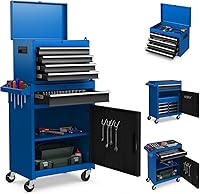
The 7-Drawer Heavy-Duty Rolling Tool Chest has seven drawers for hand tools and smaller parts, plus lockable swivel wheels.
Its listed exterior dimensions are 13 x 24 x 30 in, but those measurements don't show the inside size of each drawer. Check the drawer measurements if tall tools are the main reason you're considering it.
The VEVOR 2-in-1 5-Drawer Rolling Tool Chest can separate into a top tool chest and rolling cabinet. It also has a perforated panel with hooks and a tool-hole handle for hanging smaller tools.
This style may suit a workspace where some tools need to travel separately from the cabinet. Its exterior dimensions are 11 x 23.6 x 40.9 in, so compare your available floor space as well as your tool sizes.
When is a large chest better than deep drawers?
Choose a large chest with a single main compartment when you need room for bulky gear that won't fit well in standard drawers. Dividers can help organize the space, but they don't replace measuring the opening and interior.
The Craftsman VERSASTACK 30-Gallon Rolling Tool Chest has a 30-gallon capacity and a half-lid for quick access. Its ribs are designed for dividers, and it can connect with VERSASTACK modules.
This chest is 30.11 x 21.76 x 15.25 in externally. It has one compartment, so use cases or removable organizers if you need to keep small tools separated.
A cabinet with many drawers can work better when you have tools in several sizes. The 13-Drawer Double-Door Rolling Tool Chest has 7 large drawers, 6 small drawers, and a top chest, along with a bottom cabinet and side hooks.
Its listed exterior dimensions are 24.4 x 13 x 43.3 in. Check the drawer interior dimensions before counting on it for a specific power tool or case.
How do you keep deep drawers easy to use?
Keep tools in one layer where possible, and use small containers to group parts. If you must stack items, put the ones you use most often on top.
Label bins by size, task, or tool type. A clear category lets you return a tool to the same place after a job.
Don't store loose parts in the same drawer as a tool that can crush or scatter them. Use a divider or a separate shallow drawer for small pieces that need to stay sorted.
Open and close each drawer after loading it. If it drags or tools shift toward the front, reduce the load or change the arrangement.
Should a rolling tool chest have both deep and shallow drawers?
A mix of deep and shallow drawers works well when you own both bulky tools and small hand tools. Deep drawers provide height for larger items, while shallow drawers help keep smaller tools visible.
If most of your tools are small, prioritize a layout with more shallow drawers and use one deeper space for cases or power tools. If you have several tall tools, check that the chest has enough deep space for them without stacking.
For garage storage that needs to move, compare the available layouts in our guide to the best tool chests on wheels. Measure doorways and the parking spot before choosing a cabinet.
What should you put in a deep drawer first?
Start with the largest tool or case you plan to store, then arrange smaller items around it. That shows whether the drawer's height and opening work before you commit to a full layout.
Choose a chest with several drawer sizes if your tools range from small hand tools to power tools. Pick a large open chest if bulky gear needs one clear space, and measure the inside before ordering.
Once the chest is in place, sort tools by how you use them and keep the most frequent picks near the top. For a broader setup plan, see how to set up a rolling tool box.
Frequently asked questions
What should go in deep drawers in a tool chest?
Put taller hand tools, power tools, bulky accessories, and grouped parts in deep drawers, as long as each item fits without forcing the drawer closed. Keep frequently used tools near the top and reserve shallow drawers for items that are easier to sort in a single layer.
Are deep drawers better than shallow drawers?
Deep drawers hold taller or bulkier tools, while shallow drawers make small parts and hand tools easier to see in a single layer. A chest with both types can suit mixed tool sets, but the right balance depends on what you own and how often you reach for it.
How do I measure for a deep tool chest drawer?
Measure the drawer's inside width, depth, and height, then compare those measurements with your largest tools and organizers. Allow room to lift items out and check the drawer opening, since a tall tool may fit inside but still catch on the chest frame.
Can I store power tools in a rolling tool chest?
Yes, if the drawers or cabinet have enough usable space and the tools can be stored without stacking them in a way that blocks access. Measure each tool with its battery or handle attached, and keep chargers and accessories grouped with the tools they serve.