How to Organize a Rolling Tool Chest
To organize a rolling tool chest, map your tools by how often you use them, then load the heaviest drawers at the bottom and keep the top box for your go-to hand tools. Add non-slip liner so nothing shifts when the casters roll.
On this page (8 sections)
- Why does weight placement matter in a rolling tool chest?
- How do you decide which tools go in which drawer?
- How do you keep tools from sliding when the chest rolls?
- How should you set up the top box?
- How do you handle deep and bulky tools?
- What products help organize a rolling tool chest?
- How do you keep the layout working over time?
- Which supplies should you buy first?
To organize a rolling tool chest, sort your tools by how often you reach for them, then load the heaviest drawers at the bottom and keep the top box for hand tools you use daily. Add non-slip liner and a socket rail so nothing shifts when the casters roll.
The goal is a chest you can push to the job and open without digging. That means one home for every tool, weight kept low, and drawers that stay shut when the cabinet moves.
Why does weight placement matter in a rolling tool chest?
Weight placement decides whether the chest rolls safely. A wheeled cabinet with heavy tools up high gets top-heavy and can tip when you turn or hit a lip in the floor.
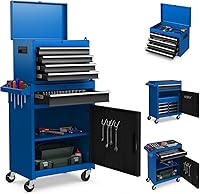
Put the heaviest items low: the bottom cabinet and the lowest drawers. An 8-drawer chest like the INTERGREAT model gives you 2 large, 3 medium and 3 small drawers, plus a bottom cabinet, so there's a natural place for every size.
Look at the drawer labels once and you can see the logic. The small drawers suit sockets, bits and screws, the medium drawers take wrenches and pliers, and the large ones hold hammers, pry bars and bulky hand tools.
The bottom cabinet carries the cases and power tools.
Keep the top box light. It lifts off on detachable models and carries your most-used hand tools, so a lower weight makes it easier to carry to a repair.
On the INTERGREAT chest, the top box stores inside the bottom cabinet when you want to save space, and that only works cleanly if the top stays the lighter half.
How do you decide which tools go in which drawer?
Group tools by task and by use frequency, not by brand or size. Ask which tools you grab every day and which you touch twice a year; that split drives the layout.
Daily tools go in the top layer or top drawer at a comfortable height. Occasional tools go in the lower drawers or the bottom cabinet.
A simple order works well:
- Top layer: tape measure, pliers, screwdrivers, utility knife
- Upper drawers: wrenches and sockets
- Middle drawers: hammers, chisels, punches
- Lower drawers: larger wrenches, pry bars, bulky hand tools
- Bottom cabinet: power tools, cases, heavy gear
Write a short list on the inside of a drawer until the layout becomes habit. If a drawer fills past about two-thirds, move the overflow down rather than cramming.
How do you use the side hooks and holes?
The INTERGREAT cabinet adds storage outside the drawers that many people forget to plan for. It has 8 hooks beside the cabinet for hanging tools, and more hooks on the bottom door with 8 tool holes in the side handle.
Use the outer hooks for things that don't fit a drawer well: safety glasses, a small bag of zip ties, a tape measure on a lanyard, or a dust brush. The door hooks and handle holes are handy for drivers and bits you want in reach without opening a drawer.
Keep hanging items light. A hook loaded with a heavy wrench adds weight off the edge of the cabinet, and a wheeled chest handles that load worse than the same weight sitting flat in a low drawer.
How do you keep tools from sliding when the chest rolls?
Line the drawers and use rails or trays so tools stay put when the casters move. Steel drawers are slippery, and a socket rolling loose is how a drawer jams.
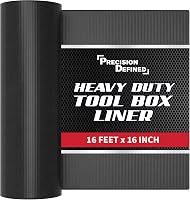
The Precision Defined liner is a 16 ft by 16 in roll of non-slip material with grid lines for straight cuts. It lies flat and can be wiped clean.
Measure each drawer, cut slightly inside the edge, and press the liner flat. Liner also protects painted drawer bottoms from scratches.
The INTERGREAT chest already ships with a liner in each drawer, so you can use the roll to refresh worn liners, add a second layer under a heavy drawer, or line the bottom shelf where cases sit.
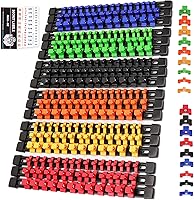
For sockets and small parts, a clip rail beats a loose pile. The SWANLAKE set has 18 rails with 238 clips for 1/4, 3/8 and 1/2-inch drives, and the colors separate SAE from metric.
Each clip holds a socket on a spring-loaded ball bearing, and the rails run 13.8 inches long. The end caps come off so you can add or remove clips and size a rail to the drawer.
Because they fit both shallow and deep sockets in metric and SAE, you can put a whole drive size on one rail and skip digging through a pile.
For more detail on laying out a socket drawer, see our guide to the best way to organize sockets in a tool chest.
How should you set up the top box?
Keep the top box for the tools you use most, arranged so you can see them at a glance. The top layer is at eye level when the chest stands, so it should hold your everyday kit.
Screwdrivers and pliers fit well in a shallow tray. A small magnetic strip or a molded tray keeps them upright rather than rolling flat.
The INTERGREAT top box has 2 handles, so it lifts off as a carry case. Load it around that use: the tools you take to the bench, the van or a repair, and nothing you would only touch while parked in the garage.
Its independent locking system means the top can stay locked while you leave the cart unprotected, or the other way round.
If your chest has a detachable top box, treat it as a portable kit. Carry just the top box to a job and leave the cart behind.
How do you handle deep and bulky tools?
Bulky tools need a drawer or cabinet with real depth, not a shallow tray. Pry bars, hammers and long wrenches won't lie flat in a shallow drawer, so plan around them.
Check drawer depth before you commit a tool to it. A deep drawer takes long wrenches and pry bars, while a shallow one will not.
The INTERGREAT chest measures 13 by 24.13 by 42.5 inches overall, so measure a level against the drawer front if a long tool keeps catching.
Put the deepest drawer at the bottom of the stack where the heavy load sits lowest. Leave the bottom cabinet for cases and power tools, and adjust or remove its shelf if a case is tall.
That bottom shelf adjusts or comes out to fit taller gear, which is how a case that would not fit one way can sit upright instead.
Our guide to how to organize wrenches covers the long ones and how to keep them from bunching.
What products help organize a rolling tool chest?
The right accessories are liner to stop sliding and rails to keep small tools in order. You don't need much; the drawers do most of the work.
The INTERGREAT 8-drawer chest is a solid base for this layout. It has a steel body with a powder-coated finish, and the coating resists scratching and chipping while the EVA padding in the drawers cushions tools and insulates against heat.
The 4 casters are all universal, and the 4 braked ones lock the chest in place.
Its top box stores into the bottom cabinet when you want to save space. The bottom shelf adjusts or comes out for taller gear.
The chest arrives assembled apart from fitting the wheels, and INTERGREAT includes both a manual and a video guide.
If you're still choosing a cabinet, our roundup of budget rolling tool chests covers the value options.
How do you keep the layout working over time?
Do a quick reset every few months and move overflow before drawers get tight. A chest stays usable when each tool has one home and you stop adding without removing.
Before a big job, clear the top layer and put back only what you need. Afterward, return tools to the drawer you planned for them.
If a drawer won't close easily, something is crowded. Move the extra item down or start a small parts box rather than forcing the drawer shut.
Wipe each drawer out with a damp cloth when you reset, since the liner and the powder-coated steel both clean easily.
Lock the braked casters when the chest is parked so it can't roll away when you pull a drawer. For general drawer layout ideas, see how to organize tool chest drawers so tools stay put.
Which supplies should you buy first?
For how to organize a rolling tool chest, start with liner and one socket rail, then expand as the drawers fill. Those two fix most of the sliding and clutter problems on their own.
Pick the Precision Defined liner to line every drawer from one 16 ft roll. Add the SWANLAKE rails if sockets and small parts are your main mess.
Choose the INTERGREAT chest if you still need a cabinet with a detachable top box and braked casters.
Load heavy tools low, keep the top box for daily hand tools, and lock the casters when parked. A layout you can repeat in minutes beats a perfect plan you never finish.
Frequently asked questions
Should the heaviest tools go in the top or bottom of a rolling tool chest?
Put the heaviest tools in the bottom cabinet and lowest drawers. A high center of gravity makes a wheeled chest tip more easily when you push it over a lip or turn sharply.
Lighter hand tools and measuring gear belong in the top box.
How do I stop drawers from rolling open when I move the chest?
Use the drawer liners that come with most steel chests and add a grippy liner under tools so weight stays put. Push the chest slowly and lock the braked casters before you open a drawer, so the cabinet cannot slide away from you.
How much weight can a rolling tool chest hold?
It varies by model and drawer size. Check the maker's drawer weight ratings before loading a drawer full of sockets or hammers.
Spread heavy items across the bottom rather than concentrating them in one small drawer.
Can I take the top box off a rolling tool chest?
On many detachable models, yes. The INTERGREAT chest splits into a top tool box and a bottom cart, each with its own lock.
That lets you carry just the top box to a job and leave the cart in the garage.
How often should I reorganize a rolling tool chest?
Roughly once or twice a year, or whenever you notice a drawer getting crowded or hard to close. A quick reset keeps everyday tools in reach and makes room before you buy something new.