Husky vs Yukon Tool Chest: Key Differences (November 2026)
Pick the Yukon-style 8-drawer chest for the most drawers and a detachable top box, and pick the Husky-style 5-drawer chest for a smaller, lighter cabinet that rolls under a bench. In this husky vs yukon tool chest comparison, drawer count and footprint decide more than the name on the badge.
On this page (9 sections)
Pick the Yukon-style 8-drawer chest when drawer count and separate locking matter, and pick the Husky-style 5-drawer cabinet when floor space and weight come first. That is the short answer to the husky vs yukon tool chest question, and drawer layout drives it more than the brand name.
This comparison uses three real chests to stand in for the two lines. A 5-drawer cabinet shows the smaller Husky-style layout, and two 8-drawer chests show the Yukon-style pattern with a detachable top box.
Husky vs Yukon tool chest: the quick verdict
For most home garages, the 8-drawer Yukon-style chest is the better buy, and the 5-drawer Husky-style cabinet wins when space is tight. Drawer count is the deciding factor for anyone with a full socket set and a drawer of screwdrivers.
The 5-drawer cabinet leads our scores at 8.7 because it packs a detachable top box and a locking bar into 38 lb. That combination is hard to beat when you roll tools from a bench to a driveway.
The 8-drawer chests score 8.3 and 7.9 because they trade extra weight for more drawer homes. Neither is a bad chest; each just asks for more floor space and more strength to move.
The 8-drawer designs split storage into a top box and a bottom cart, so you can leave the heavy cabinet parked and carry the small box to the job. That matters more than the badge when your garage doubles as a workspace.
The two side by side
The Yukon-style chests carry eight drawers and a separate top box; the Husky-style cabinet carries five drawers in a narrower, lighter shell. The table shows where each one earns its place.

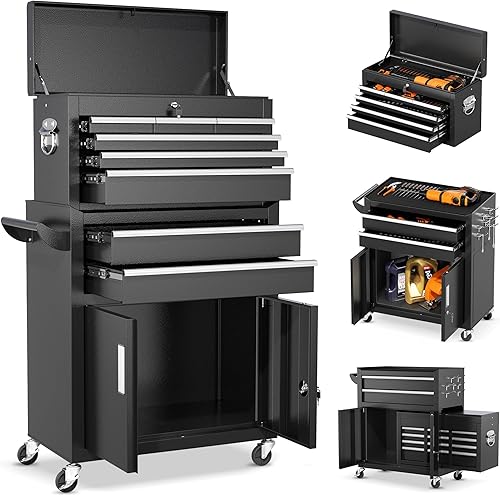 Best for the most drawer storage
8-Drawer Assembled Rolling Tool Chest
The 5-drawer cabinet measures 23.5 x 11 x 40 in and weighs 38 lb. The 8-drawer chest measures 13 x 24.13 x 42.5 in and weighs 60.2 lb, while the 42-inch model comes in at 24.4 x 13 x 42.1 in with a 550 lb load rating.
Read those numbers as a trade. The Husky-style cabinet is easier to wheel into a corner; the Yukon-style chests give every size of tool its own drawer.
| Product | Best for | Size (W x D x H) | Drawers | Weight | Our score |
|---|---|---|---|---|---|
| Goplus 5-Drawer Rolling Tool Cabinet | tight garage bays | 23.5 x 11 x 40 in | 5 plus two trays | 38 lb | 8.7 |
| 8-Drawer Assembled Rolling Tool Chest | the most drawer storage | 13 x 24.13 x 42.5 in | 8 | 60.2 lb | 8.3 |
| 42-Inch 8-Drawer Rolling Tool Chest | heavy tool loads | 24.4 x 13 x 42.1 in | 8 | 7.9 |
Depth is the figure people overlook. An 11 in deep cabinet takes a socket rail but not long extensions lying flat.
The 13 in deep chests add two inches, often the difference between a drawer that closes and one that catches. Height works the other way: the 40 in cabinet clears more wall shelves than the 42 in models.
Drawer count: five drawers or eight?
Eight drawers separate tools better; five drawers keep the cabinet cheaper and lighter. Count your tool types before you count drawers.
The 8-drawer chest splits its storage into 2 large, 3 medium and 3 small drawers, plus a top layer and a bottom cabinet. That layout lets sockets live apart from hammers and measuring tools.
The 5-drawer cabinet offers five drawers and two trays, with a bottom shelf you can adjust or remove. It suits a home mechanic with a modest kit rather than a full socket set in every drive size.
If your current toolbox is one deep bin you dig through, eight drawers change how you work. If you own a hammer, a socket set and a screwdriver roll, five is plenty.
How the drawer sizes split the work
The 8-drawer chest's 2 large drawers take hammers and power tools, its 3 medium drawers fit wrench rolls and socket trays, and its 3 small drawers hold bits and fasteners. The bottom cabinet takes bulky items.
The 5-drawer cabinet uses two trays up top for loose tools. Its adjustable bottom shelf can drop or come out to fit a tool case or a small compressor.
Plan your heaviest drawer first. In the 8-drawer chest, the bottom cabinet carries the weight and the top box stays light enough to lift.
In the 5-drawer cabinet, the drawers sit at cabinet height, so there is no deep bin to hide a heavy tool.
Locking and security
The 8-drawer chests lock the top box and cabinet separately; the 5-drawer cabinet uses one lock bar across the drawers. Both keep casual hands out of your tools.
The 5-drawer cabinet has a key lock and a locking bar that stops drawers sliding out and the cabinet door opening while you roll it. The bar does double duty: it is the same bar that holds the drawers shut in transit.
A chest without that bar can spill a drawer on a bumpy driveway.
The 8-drawer chest gives the top box and bottom cart independent locking systems, so you can leave the cabinet locked while carrying the box. The 42-inch model runs on a single key lock for the whole cabinet.
None of these is a safe. A key lock stops an opportunist in an open garage, not a determined thief with tools of their own.
Wheels and moving a loaded chest
All three roll on four casters, and brake count decides how steady each one sits. Weight matters as much as wheel design once drawers are full.
The 5-drawer cabinet has four flexible universal wheels, two with brakes, so it turns easily in a tight bay. The 8-drawer chest brakes all four casters, which holds better on a sloped floor.
The 42-inch chest uses silent swivel wheels with independent rear brakes and an ergonomic handle. Quiet wheels help in a home garage late at night, though its 550 lb load rating means you won't want to push it up a ramp alone.
A 38 lb empty cabinet is a one-person move on flat concrete. A 60 lb chest loaded with sockets is not; clear the path before you fill it.
The lighter cabinet's advantage is turning: its 38 lb shell lets one person spin it in a tight bay. The heavier chests turn on the same kind of wheels but need more effort to start moving.
Size and footprint in a home garage
The Husky-style cabinet fits narrower gaps; the Yukon-style chests need more depth and a little more width. Measure your bay before you buy either.
At 23.5 in wide and 11 in deep, the 5-drawer cabinet slides along a wall or beside a bench without blocking a car door. That shallow depth is the reason it fits where an 8-drawer chest will not.
The 8-drawer chests run about 24 in wide and 13 in deep, and both stand just over 42 in tall. That extra depth holds longer tools but eats floor space in a one-car garage.
Height matters too. A 42 in cabinet puts the top drawer near shoulder level for many people, which is comfortable for daily use but awkward under a low shelf.
Picture the gap between a wall and a parked car: a 23.5 in wide cabinet leaves a little walking room in most one-car garages, while a 24.4 in chest nearly fills the same slot.
Build, liners and tool storage
The 42-inch chest leads on steel and load rating; the 5-drawer cabinet leads on smart storage extras. Match the build to how hard you use the chest.
The 42-inch chest is made from cold-rolled steel with a powder coat, rated to 550 lb, and each drawer has a non-slip pad that protects tools and quiets opening. It also adds 10 removable hooks on a side panel.
The 5-drawer cabinet uses powder-coated steel with EVA liners, a lock bar and six tool holes in the side handle for screwdrivers. Its bottom shelf adjusts or comes out for taller items.
The 8-drawer chest brings EVA padding in every drawer, 8 hooks and tool holes in the side handle, plus a detachable top box you can carry. It is the middle option on build and the strongest on storage extras.
Liners and hooks, compared
The 42-inch chest uses non-slip pads, which grip tools and cut the rattle when you open a drawer. The 5-drawer cabinet and the 8-drawer chest use EVA padding, a denser foam that cushions tools and adds a little heat insulation.
For a drawer of sockets that bangs around, the foam does more than the thin pad.
Hooks are the second difference. The 42-inch chest gives you 10 removable hooks you can place freely on its side panel.
The 8-drawer chest offers 8 hooks beside the cabinet. The 5-drawer cabinet has six tool holes in the side handle and movable hooks on the cabinet door.
The cabinet with the most holes and hooks keeps your benchtop clearer.
The 42-inch chest's 550 lb rating is a figure the smaller chests don't match. If you plan to load a bottom cabinet with a bench vise or corded tools, that rating is the reason to step up.
Which should you buy?
Buy the Yukon-style 8-drawer chest if you want every tool in its own drawer and a top box you can carry. Buy the Husky-style 5-drawer cabinet if your garage is small or you move the chest often.
Who should buy the 8-drawer Yukon-style chest?
A home mechanic with a full socket set, wrench roll and a few power tools gets the most from eight drawers. The detachable top box means hand tools travel to the job while the cabinet stays parked.
Its four braked casters hold steady on a sloped floor, and separate locks let you secure the cabinet and carry the box.
Skip it if you move the chest up steps or lift it into a truck. At 60.2 lb empty, it is a two-person job once loaded.
Who should buy the 5-drawer Husky-style cabinet?
A renter or small-garage owner gets more from the 23.5 x 11 x 40 in cabinet. It rolls into a corner and weighs 38 lb, so one person can shift it.
The lock bar keeps drawers shut during moves, and the detachable top box stows in the lower chest when not in use.
Skip it if you own deep sockets and long extensions. The 11 in depth leaves less room than the 8-drawer chests.
When the 42-inch chest is the better call
A shop that stores heavy wrenches, hammers and corded power tools should look at the 550 lb load rating on the 42-inch chest. Its 10 side hooks and non-slip drawer pads suit a working garage.
It is not water resistant, so keep it in a dry garage rather than a damp shed.
Our guide to who makes Husky tool chests helps if you are still deciding between the two brands. For a chest you carry between rooms, see the portable tool chest roundup.
Verdict: which chest wins for most home garages?
The Yukon-style 8-drawer chest wins for most home garages because eight drawers keep a growing tool kit organized, and the 5-drawer Husky-style cabinet wins when floor space and weight matter most. That is the husky vs yukon tool chest call in one line.
Our top score goes to the Goplus 5-drawer cabinet at 8.7 because it does the most with the least space. It is the best choice for a tight bay, a rental garage or anyone who rolls tools to the car.
The 8-drawer chest at 8.3 is the better buy for a home mechanic who wants every tool in its own drawer, and the 42-inch chest at 7.9 suits a heavier shop load and a dry, roomy garage.
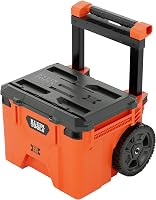
If you also stack boxes on top of your chest, the ToughBuilt StackTech vs Milwaukee Packout comparison shows which modular system locks together better. And if you plan to carry tools to jobs, the Klein MODbox review covers a rolling box built for the road.
Start by measuring the gap where the chest will live. If it is 24 in wide and 11 in deep or less, the Husky-style cabinet is your chest; anything roomier leaves the door open for eight drawers.
Frequently asked questions
Is a Yukon tool chest the same as a Husky tool chest?
No. They come from different makers and differ in drawer count, size and features, so compare the actual cabinet in front of you rather than the brand name.
A Yukon-style 8-drawer chest typically carries more drawers, while a Husky-style 5-drawer cabinet is lighter and narrower.
How many drawers should a home tool chest have?
Five drawers cover hand tools and a few power tools; eight give you separate homes for wrenches, sockets, screwdrivers and bits. Pick the count around what you own, not around the biggest number in the store.
Can I move a loaded tool chest by myself?
A 38 lb empty chest is manageable on flat concrete, but the same cabinet loaded with sockets and wrenches is much heavier. The 8-drawer chests here weigh 60 lb or more empty, so plan a second person or a clear path before you fill one.
Do rolling tool chests lock?
All three chests here take a key lock. The 5-drawer cabinet uses a lock bar that holds the drawers and cabinet door while rolling, and the INTERGREAT 8-drawer chest locks the top box and cabinet separately.
Which tool chest is best for a small garage?
The 5-drawer cabinet at 23.5 x 11 x 40 in is the smallest here and fits along a wall or under a bench. The 8-drawer chests need about 24 in of width and 13 in of depth, which still leaves walking room in most one-car garages.